Most of us grew up being told butter was bad for us. Saturated fat, heart disease, switch to margarine, we heard it for decades. Then the science started shifting, and many of us quietly went back to butter, relieved that one of life’s simple pleasures wasn’t the villain after all.
But here’s the problem nobody is talking about. A lot of what’s sitting in the butter section at your supermarket isn’t actually butter. It’s an industrial blend of seed oils, emulsifiers and water, dressed up in familiar packaging and trading on the trust you’ve placed in a brand name.
I went through the top five butters sold in Australian supermarkets so you don’t have to. What I found was eye-opening.
What Real Butter Actually Is
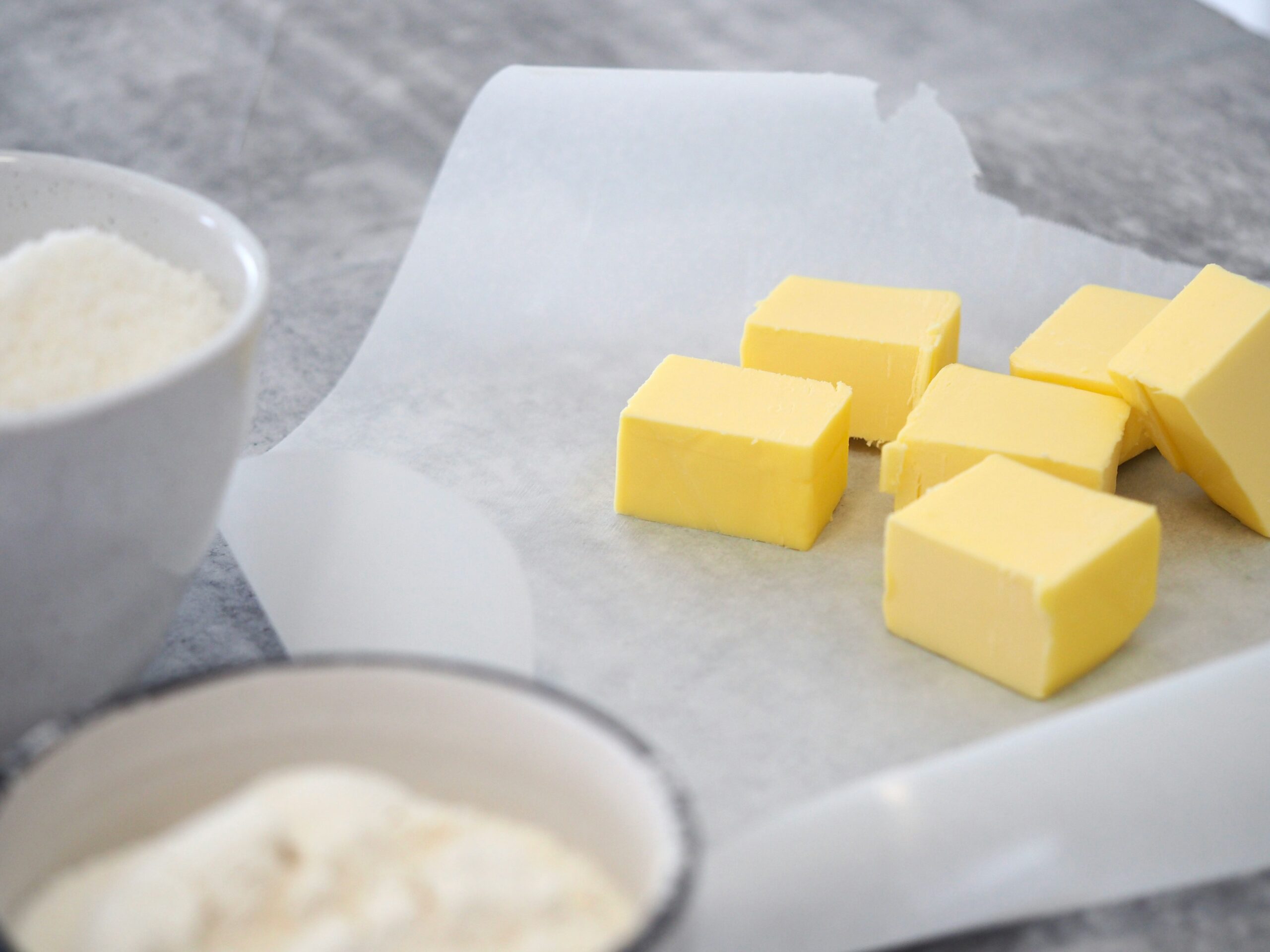
Real butter has two ingredients. Cream. Salt. That’s it. It contains a minimum of 80% milk fat, which is why it goes hard in the fridge. If your “butter” spreads straight from the fridge, something usually has been added to make that happen, (there is one exception you will find below) and that something is almost never good for you.
The Top 5 Butters in Australian Supermarkets — Ranked
#1 Aldi Butterfully — Not Butter
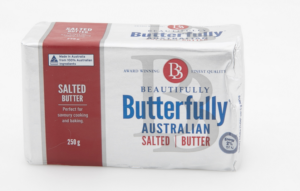
This product won a “best butter” consumer survey. It contains 11.5% butterfat. Real butter contains a minimum of 80%.
What fills the rest of the tub? Unspecified vegetable oils, almost certainly canola and/or palm oil plus emulsifiers to force the whole chemistry experiment into something that resembles butter.
Unspecified vegetable oils Almost certainly canola and/or palm oil. These are industrial seed oils added purely to reduce manufacturing costs. The fact that Aldi doesn’t even specify which vegetable oils tells you everything about how much they respect the consumer. When you’re paying for butter, you shouldn’t be getting a product that requires guesswork about what’s actually in it.
Emulsifiers (unspecified) Required to force water and oil into a stable blend that mimics the texture of actual butter. Research published in Gastroenterology journal found that common synthetic emulsifiers disrupted gut microbiota and metabolic health in human trials. (Source: https://www.gastrojournal.org/article/S0016-5085(21)03728-8/fulltext) You need industrial chemistry to make this product hold together because it is not real food.
11.5% butterfat Real butter is minimum 80% milk fat. This product is an industrial blend designed to look and spread like butter at a fraction of the ingredient cost.
The fact that it won a best butter award is a damning indictment of consumer surveys where people rate spreadability and price above what they’re actually eating.
Verdict: Not butter. A tub of industrial seed oil with enough dairy solids to skate past the labelling laws.
#2 WestGold New Zealand Grass-Fed – Buy With Confidence
Ingredients: Cream, salt. That’s it.
82.1% milk fat, traditional churn method, grass-fed New Zealand dairy. This is what butter is supposed to be.
Verdict: The best supermarket-accessible option in Australia. Buy it.
#3 Lurpak Spreadable — Not What You Think
Here’s where brand trust gets weaponised against you. Lurpak’s block butter is excellent, cream, salt, cultures, nothing else. Their spreadable tub is an entirely different product.
Ingredients include canola oil, emulsifiers, potassium sorbate preservative and something listed as “natural flavour” — a regulatory loophole term that can mask dozens of compounds. When you have to add flavour back into a butter product, you’ve already lost the plot.
Canola oil Added because it’s cheap and makes the product spreadable straight from the fridge. When a premium brand cuts its butter with industrial oil, that’s a straight profit play at your expense. You’re paying for butter and getting something significantly different.
Mono- and diglycerides (471) Emulsifiers that stabilise the oil-butter-water mixture. Research links synthetic emulsifiers to gut barrier dysfunction and altered microbiota. (Source: https://link.springer.com/article/10.1186/s40168-020-00996-6)
Potassium sorbate (202) — A synthetic preservative added because a product containing water and oil blended together is a microbial playground. Real butter with 82% fat and negligible water content doesn’t need preservatives. The fact that this product does tells you exactly what’s really inside the tub.
“Natural flavour” A regulatory loophole term that can mask dozens of compounds. When you have to add flavour back into a butter product, you’ve already lost the plot.
Verdict: A premium-priced industrial blend trading on the Lurpak name. Buy the block, never the tub.
#4 Mainland ButterSoft: Actually Clean
Ingredients: Pasteurised cream (from milk), salt.
That’s it. Two ingredients. No seed oils, no emulsifiers, no preservatives, no “natural flavour,” no numbers in brackets. This is genuinely just butter.
Milk fat: 80% minimum, with the product sitting at 81.7% total fat. That’s proper butter territory — above the legal minimum and in line with block butter standards.
Sodium: 480 mg per 100 g. A touch lower than WestGold salted (550 mg), so it’s actually slightly less salty.
#5 Western Star Spreadable Tub — Seed Oil in Disguise
Important distinction — Western Star’s block butter is excellent. Cream, salt, nothing else. This is about their spreadable tub, which is a completely different product.
Over a third of this product — 34% — is vegetable oil. You’re paying butter prices for what is substantially an oil blend with some dairy added, bulked out with water and held together with emulsifiers. The Western Star name on the tub is doing a lot of heavy lifting for what’s actually inside it.
Verdict: Buy the block. Put the tub back on the shelf.
The Pattern Is Obvious Once You See It
Block butter is real food. Tub butter is almost always an industrial product.
The Problems:
Silicon dioxide (551) is essentially finely ground silica — sand, quartz dust. While regulatory bodies classify it as GRAS (generally recognized as safe), the nanoparticle form used in food processing is a different beast entirely from the inert sand you’d find on a beach. These nanoparticles are small enough to cross the gut barrier and enter the bloodstream. The long-term effects of chronic low-dose exposure to food-grade silica nanoparticles are not well studied, and what research does exist raises legitimate questions about accumulation in tissues and inflammatory responses.
Sodium aluminosilicate (554) introduces aluminum into the equation. Aluminum is a known neurotoxin with no biological function in the human body. While the amounts in butter are small, the problem is cumulative exposure — you’re getting aluminum from antiperspirants, cookware, baked goods, processed cheese, and a hundred other sources. The body has no efficient excretion pathway for aluminum, and it accumulates in bone and brain tissue over time.
The real issue isn’t necessarily the acute toxicity of these agents — it’s the principle. Butter is one of the simplest foods humans have made for thousands of years: cream, salt, maybe cultures. The fact that industrial producers feel the need to add flow agents to keep salt from clumping tells you everything about the priorities at play. They’re optimizing for shelf stability and uniform appearance across massive distribution chains, not for what you’re putting in your body.
The spreadable tub format virtually guarantees seed oils, emulsifiers, preservatives and water — none of which belong in butter and none of which real butter needs. The industry has successfully blurred the line between butter and butter blends, and a best butter survey crowning a product with 11.5% butterfat is proof the strategy is working.
The emulsifier concern alone is worth taking seriously — peer reviewed human trials have found synthetic emulsifiers commonly used in processed food blends can disrupt gut microbiota. Real butter contains none of them because it doesn’t need them.
What To Actually Buy
Look for block butter with a short ingredient list. In Australian supermarkets these are your best options:
WestGold Grass fed salted or unsalted block — Coles, Woolworths
Kirkland 95% Grass fed butter – Costco
Lurpak block — Coles, Woolworths, IGA
Western Star block salted or unsalted — Coles, Woolworths, IGA
Devondale block salted or unsalted — Coles, Woolworths, IGA
Coles Organic salted butter — Coles
Aldi Pure Valley salted or unsalted — Aldi
Great Ocean Road salted block — Coles
President French butter — Harris Farm
Pepe Saya Australian cultured butter — selected Woolworths
Lescure — Coles and specialty shops
Échiré — specialty grocers
The rule is simple. Read the label. If the ingredients list contains numbers in brackets, put it back on the shelf. If your butter needs anticaking agents, emulsifiers or preservatives, it isn’t really butter.
If you need spreadability, take your butter out of the fridge 20 minutes before you need it. It costs nothing and you won’t be eating industrially processed oil disguised as dairy.
The Bigger Picture
Reading labels is one of the simplest and most powerful things you can do for your health. Not because you need to be paranoid about food, but because you deserve to know what you’re actually eating.
Real butter is one of the oldest, simplest foods humans have ever made. It shouldn’t need a chemistry degree to understand the ingredients.
Have you checked what’s in your butter lately? Share this with someone who might be surprised.
Research Sources
Lipid Peroxidation & Oxidative Damage
Look up the work of Dr. Chris Knobbe — an ophthalmologist who’s compiled extensive research on seed oils and chronic disease. His book and presentations trace the correlation between seed oil consumption and the explosion of age-related macular degeneration, heart disease, and metabolic disorders. He argues AMD was virtually nonexistent before seed oils entered the food supply.
Also search for “4-hydroxynonenal linoleic acid” and “lipid peroxidation products dietary heated oils” — this gets you into the mechanistic literature on what happens when you actually cook with these oils.
The Omega-6:3 Ratio Problem
The University of Queensland Mendelian randomization study I mentioned is published in the International Journal of Epidemiology (June 2025). Search for “Daisy Crick omega-6 omega-3 ratio inflammation Mendelian randomization” and you’ll find it. That’s the study showing both omega-3 and omega-6 raise GlycA, and that the ratio is what matters.