You’re standing in the supplement aisle, looking at two green powders that cost a small fortune and promise everything from detox to more energy. Which one is worth your money, if either? The short answer: both have some real research behind them, but the benefits are smaller than the marketing suggests, and the quality of what’s in the tub matters more than which algae you pick.
This post walks through what the studies actually found, where the claims fall apart, and what to check on the label before you buy.
First, what are you actually buying?
Spirulina and chlorella are both sold as “green superfoods”, but they are different organisms.
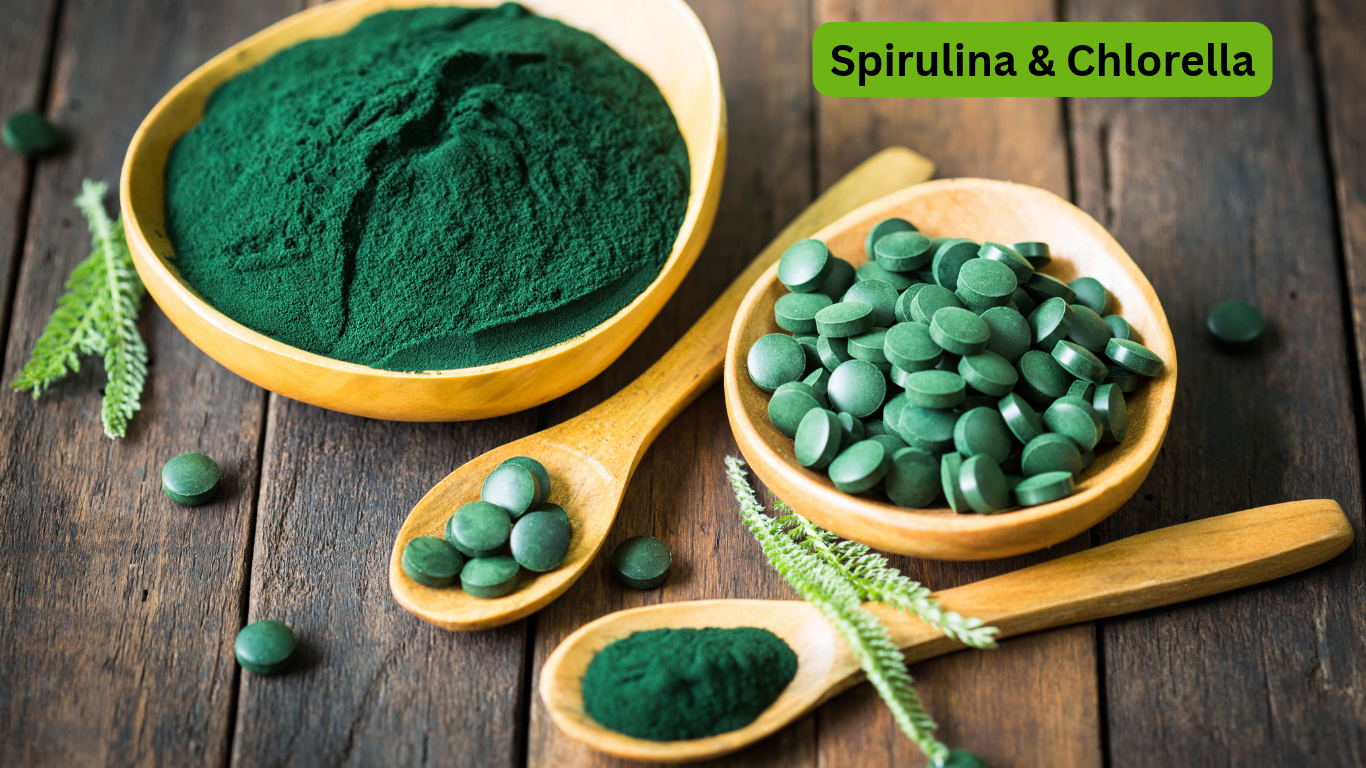
- Spirulina is a cyanobacterium (sometimes called blue-green algae). Dried spirulina is roughly 60 to 70 percent protein, and it contains iron, B vitamins and a blue pigment called phycocyanin.
- Chlorella is a true green alga. It is known for chlorophyll and, in some products, vitamin B12. Its cell wall is made of cellulose, which humans can’t digest, so good supplements break the cells open first.
At the 1 to 3 gram a day most people take, neither is a meaningful source of protein or calories. Whatever benefit exists has to come from the other compounds in them.
Spirulina: small benefits, reasonably consistent
Spirulina has the stronger research of the two. A 2025 meta-analysis pooled 35 randomised trials and found small improvements in blood sugar, triglycerides, total and LDL cholesterol, HDL cholesterol and blood pressure. Blood pressure dropped by roughly 4 points systolic and 3 points diastolic on average. The reviewers rated the certainty of the evidence as low to moderate, and another 2025 review found a diastolic blood pressure effect but no clear change in cholesterol. So the honest summary is “a modest nudge”, not a fix.
There is also early evidence for hayfever-type allergies. A double-blind, placebo-controlled trial of 150 people with allergic rhinitis found spirulina beat placebo for sneezing, congestion, itching and nasal discharge, and a smaller Iranian trial found it comparable to the antihistamine cetirizine. A systematic review found just two trials in total, so treat this as promising rather than proven.
One catch: many trials used far more than a typical serving, with doses of up to 19 grams a day.
Chlorella: the reviews don’t agree
Chlorella’s cardiovascular research points in different directions depending on which review you read. A 2017 meta-analysis of 19 studies found better total cholesterol and systolic blood pressure, mostly in people who already had risk factors rather than healthy volunteers. A 2022 analysis found lower total and LDL cholesterol but no change in triglycerides or HDL. A 2025 review of randomised trials then found a neutral effect on both blood pressure and blood fats.
There is also a quality problem. The 2022 analysis noted that only two of the included studies checked the content, purity, potency or contamination of the chlorella they used. When researchers don’t know exactly what was in the capsule, it is hard to say what the result means for the product on your shelf.
The two big claims: “detox” and B12
Detox. This is the claim most often printed on the tub, and the weakest. The supporting data come mainly from animal studies. A recent paper on chlorella and mercury states plainly that no clinical recommendation for heavy metal detoxification has been established in humans. If a product says it removes heavy metals from your body, it is going beyond the evidence.
Vitamin B12. This one depends on which algae you buy.
- Spirulina mainly contains pseudovitamin B12, an inactive form that humans can’t use. It is not a B12 source for vegans.
- Chlorella can contain real B12, but the amount varies wildly. A survey of 19 chlorella products found anything from under 0.1 microgram to around 415 micrograms per 100 grams dry weight. A small open-label study in vegetarians and vegans suggested the B12 in one chlorella product was usable, but it was exploratory.
If you avoid animal foods, treat this as a lottery and use a proper B12 supplement.
Is it safe? Mostly, but the brand matters
Both are generally well tolerated, and the US Pharmacopeia gave spirulina its top safety rating (Class A). The real risk is contamination, because algae grown in open ponds can pick up whatever is in the water.
One study of 10 microalgae supplements found toxins called microcystin-LR and anatoxin-a in three of them, including a chlorella product, and some products had high lead levels. Other surveys were more reassuring: 25 spirulina products from around the world were well within limits for the metals tested. In short, some brands are fine and some are not, and you can’t tell from the front of the tub.
If you take blood thinners, have an autoimmune condition, are pregnant or breastfeeding, or are giving a supplement to a child, speak to your doctor or pharmacist first. Spirulina and chlorella can interact with some medicines and conditions, and your health professional can check that against what you take.
What to check on the label before you buy
- Is it listed on the ARTG? In Australia, look for an AUST L number, which shows the product is on the Therapeutic Goods Administration’s register.
- Does it mention independent testing? Look for testing for heavy metals and microcystins, ideally with results you can see on the brand’s website.
- For chlorella: is the cell wall broken? Look for “cracked cell wall” or similar wording. Without it, you may not digest much of what you swallow.
- How much is in a serving? Compare the daily dose to the 1 to 3 grams most people take, and to the higher doses used in studies.
- Does it promise detox, or a cure? Treat “removes heavy metals” and similar claims as a red flag. The human evidence isn’t there.
- Is B12 doing the heavy lifting in the marketing? If it’s spirulina, the B12 isn’t usable. If it’s chlorella, the amount can vary hugely between products.
The verdict
If you want to try one, spirulina has the better evidence, mainly for blood pressure and possibly for hayfever symptoms. Chlorella’s results are mixed, and its best-known claim, detox, isn’t backed by human research. Neither replaces vegetables, protein or a good diet.
The bigger win is choosing a product that is on the ARTG, independently tested, and honest about what it can’t do. A cheap, untested tub with big promises is the real marketing hype here.
This article is general information only and isn’t medical advice. Speak to your doctor or pharmacist before starting a supplement, especially if you take medicines or have a health condition.
References
- Chlorella and cardiovascular risk factors, meta-analysis summary (Fallah 2017)
- Chlorella vulgaris and lipid profile, meta-analysis, Complement Ther Med 2022
- Potential of Chlorella as a dietary supplement
- The effects of spirulina on allergic rhinitis (Cingi 2008)
- Spirulina and allergic rhinitis, systematic review (medRxiv preprint)
- Clinical comparison of spirulina and cetirizine for allergic rhinitis, summary on Examine
- Vitamin B12 compounds in edible algae, J Nutr Sci Vitaminol
- Vitamin B12 in 19 chlorella supplements, J Agric Food Chem 2016
- Chlorella supplementation in vegans and vegetarians, J Med Food 2015
- Chlorella and mercury exposure, transcriptomic analysis
- Contaminants in microalgae supplements, Toxins 2020
- US Pharmacopeia safety evaluation of spirulina, 2011
- Heavy metals in 25 commercial spirulina products